Implement Linear Regression with Regularization
From-scratch implementation with closed-form, gradient descent, and regularization variants
Problem Statement
Implement Linear Regression from scratch. Given training data X and targets y, fit a linear model to predict continuous values. Extend to include L1 (Lasso), L2 (Ridge), and Elastic Net regularization.
Clarifying Questions to Ask
- Closed-form or iterative? (Normal equation vs gradient descent)
- Regularization needed? (None, L1, L2, or Elastic Net)
- Feature scaling? (Important for gradient descent convergence)
- Intercept handling? (Add bias term or assume centered data)
- Libraries allowed? (NumPy yes, sklearn no)
Key Mathematical Formulas
Linear Model
Where
Loss Functions
| Type | Loss Function | Gradient |
|---|---|---|
| OLS | ||
| Ridge (L2) | ||
| Lasso (L1) | Subgradient / Coordinate descent | |
| Elastic Net | Combined approach |
Algorithm Flow
Gradient Descent Convergence
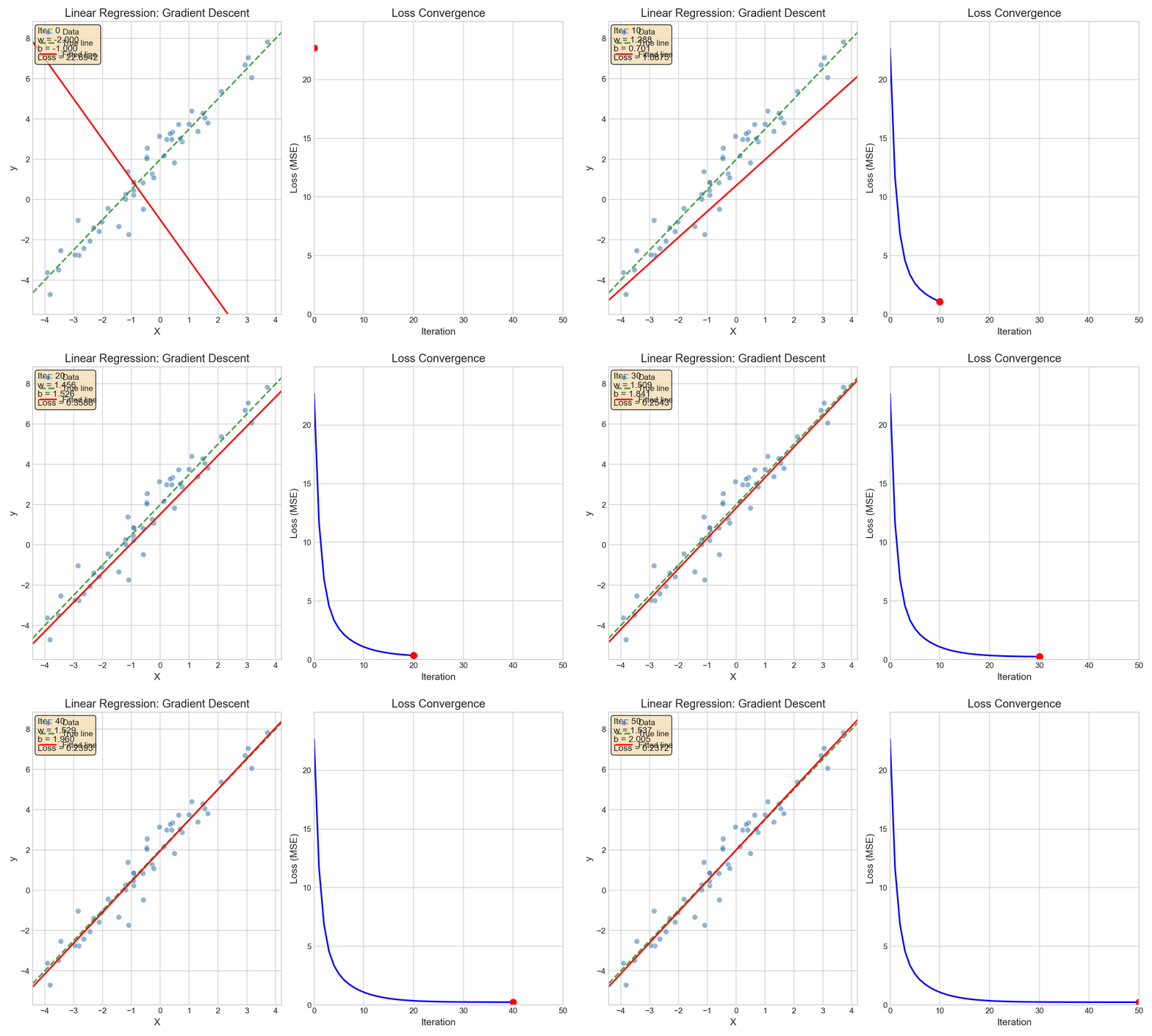
The animation shows how gradient descent iteratively updates weights to minimize loss.
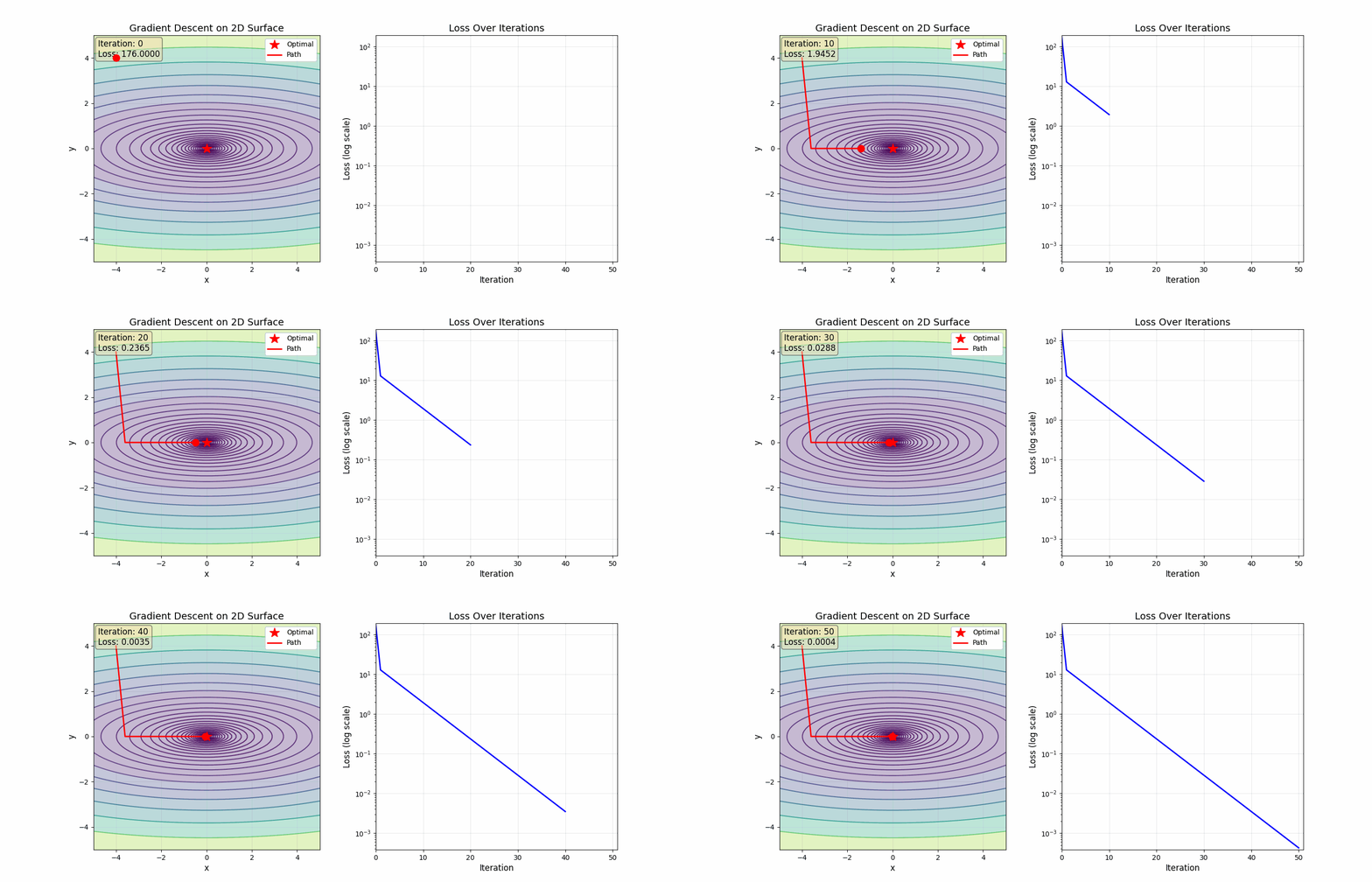
Step-by-step visualization on a contour plot showing how the optimizer follows the steepest descent direction.
Solution 1: Basic Linear Regression (Closed-Form)
Normal Equation
The closed-form solution:
from typing import List, Tuple
import math

def linear_regression_fit(X: List[List[float]], y: List[float],
                          fit_intercept: bool = True) -> Tuple[List[float], float]:
    """
    Fit linear regression using the normal equation.

    Args:
        X: Feature matrix, shape (n_samples, n_features)
        y: Target values, shape (n_samples,)
        fit_intercept: Whether to fit intercept term

    Returns:
        weights: Coefficient for each feature
        intercept: Bias term (0 if fit_intercept=False)
    """
    n_samples = len(X)
    n_features = len(X[0]) if X else 0

    # Add intercept column if needed
    if fit_intercept:
        X_aug = [[1.0] + list(row) for row in X]
        n_features += 1
    else:
        X_aug = [list(row) for row in X]

    # Compute X^T X
    XtX = [[0.0] * n_features for _ in range(n_features)]
    for i in range(n_features):
        for j in range(n_features):
            for k in range(n_samples):
                XtX[i][j] += X_aug[k][i] * X_aug[k][j]

    # Compute X^T y
    Xty = [0.0] * n_features
    for i in range(n_features):
        for k in range(n_samples):
            Xty[i] += X_aug[k][i] * y[k]

    # Solve (X^T X) w = X^T y using Gaussian elimination
    w = solve_linear_system(XtX, Xty)

    if fit_intercept:
        return w[1:], w[0]
    else:
        return w, 0.0


def solve_linear_system(A: List[List[float]], b: List[float]) -> List[float]:
    """Solve Ax = b using Gaussian elimination with partial pivoting."""
    n = len(A)
    # Augmented matrix
    aug = [A[i][:] + [b[i]] for i in range(n)]

    # Forward elimination
    for col in range(n):
        # Find pivot
        max_row = col
        for row in range(col + 1, n):
            if abs(aug[row][col]) > abs(aug[max_row][col]):
                max_row = row
        aug[col], aug[max_row] = aug[max_row], aug[col]

        # Eliminate column
        for row in range(col + 1, n):
            if aug[col][col] != 0:
                factor = aug[row][col] / aug[col][col]
                for j in range(col, n + 1):
                    aug[row][j] -= factor * aug[col][j]

    # Back substitution
    x = [0.0] * n
    for i in range(n - 1, -1, -1):
        x[i] = aug[i][n]
        for j in range(i + 1, n):
            x[i] -= aug[i][j] * x[j]
        if aug[i][i] != 0:
            x[i] /= aug[i][i]

    return x


def predict(X: List[List[float]], weights: List[float], intercept: float) -> List[float]:
    """Make predictions using learned weights."""
    predictions = []
    for x in X:
        pred = intercept + sum(w * xi for w, xi in zip(weights, x))
        predictions.append(pred)
return predictionsimport numpy as np
def linear_regression_fit(X, y, fit_intercept=True):
"""
Fit linear regression using the normal equation.
Args:
X: Feature matrix, shape (n_samples, n_features)
y: Target values, shape (n_samples,)
fit_intercept: Whether to fit intercept term
Returns:
weights: Coefficient for each feature
intercept: Bias term (0 if fit_intercept=False)
"""
X = np.array(X)
y = np.array(y)
# Add intercept column if needed
if fit_intercept:
X_aug = np.column_stack([np.ones(len(X)), X])
else:
X_aug = X
# Normal equation: w = (X^T X)^-1 X^T y
# Use np.linalg.lstsq for numerical stability
w, residuals, rank, s = np.linalg.lstsq(X_aug, y, rcond=None)
if fit_intercept:
return w[1:], w[0]
else:
return w, 0.0
def predict(X, weights, intercept):
"""Make predictions using learned weights."""
X = np.array(X)
weights = np.array(weights)
return X @ weights + interceptSolution 2: Ridge Regression (L2 Regularization)
Closed-form:
from typing import List, Tuple

def ridge_regression_fit(X: List[List[float]], y: List[float],
                         alpha: float = 1.0, fit_intercept: bool = True) -> Tuple[List[float], float]:
    """
    Fit Ridge regression using closed-form solution.

    Args:
        X: Feature matrix
        y: Target values
        alpha: Regularization strength (lambda)
        fit_intercept: Whether to fit intercept

    Returns:
        weights, intercept
    """
    n_samples = len(X)
    n_features = len(X[0])

    # Center data if fitting intercept
    if fit_intercept:
        X_mean = [sum(X[i][j] for i in range(n_samples)) / n_samples
                  for j in range(n_features)]
        y_mean = sum(y) / n_samples

        X_centered = [[X[i][j] - X_mean[j] for j in range(n_features)]
                      for i in range(n_samples)]
        y_centered = [y[i] - y_mean for i in range(n_samples)]
    else:
        X_centered = X
        y_centered = y
        X_mean = [0.0] * n_features
        y_mean = 0.0

    # Compute X^T X + alpha * I
    XtX = [[0.0] * n_features for _ in range(n_features)]
    for i in range(n_features):
        for j in range(n_features):
            for k in range(n_samples):
                XtX[i][j] += X_centered[k][i] * X_centered[k][j]
        XtX[i][i] += alpha  # Add regularization to diagonal

    # Compute X^T y
    Xty = [0.0] * n_features
    for i in range(n_features):
        for k in range(n_samples):
            Xty[i] += X_centered[k][i] * y_centered[k]

    # Solve system
    weights = solve_linear_system(XtX, Xty)

    # Compute intercept
    if fit_intercept:
        intercept = y_mean - sum(w * m for w, m in zip(weights, X_mean))
    else:
        intercept = 0.0

return weights, interceptimport numpy as np
def ridge_regression_fit(X, y, alpha=1.0, fit_intercept=True):
"""
Fit Ridge regression using closed-form solution.
Args:
X: Feature matrix, shape (n_samples, n_features)
y: Target values, shape (n_samples,)
alpha: Regularization strength (lambda)
fit_intercept: Whether to fit intercept
Returns:
weights, intercept
"""
X = np.array(X, dtype=np.float64)
y = np.array(y, dtype=np.float64)
n_samples, n_features = X.shape
# Center data if fitting intercept
if fit_intercept:
X_mean = X.mean(axis=0)
y_mean = y.mean()
X_centered = X - X_mean
y_centered = y - y_mean
else:
X_centered = X
y_centered = y
X_mean = np.zeros(n_features)
y_mean = 0.0
# Closed-form: w = (X^T X + alpha * I)^-1 X^T y
XtX = X_centered.T @ X_centered
Xty = X_centered.T @ y_centered
# Add regularization to diagonal
XtX_reg = XtX + alpha * np.eye(n_features)
# Solve the regularized normal equations (LU via np.linalg.solve)
weights = np.linalg.solve(XtX_reg, Xty)
# Compute intercept
if fit_intercept:
intercept = y_mean - X_mean @ weights
else:
intercept = 0.0
return weights, interceptSolution 3: Lasso Regression (L1 Regularization)
Uses coordinate descent with soft thresholding:
from typing import List, Tuple

def soft_threshold(z: float, threshold: float) -> float:
    """Soft thresholding operator for L1 regularization."""
    if z > threshold:
        return z - threshold
    elif z < -threshold:
        return z + threshold
    else:
        return 0.0


def lasso_regression_fit(X: List[List[float]], y: List[float],
                         alpha: float = 1.0, max_iters: int = 1000,
                         tolerance: float = 1e-6) -> Tuple[List[float], float]:
    """
    Fit Lasso regression using coordinate descent.

    Args:
        X: Feature matrix
        y: Target values
        alpha: Regularization strength
        max_iters: Maximum iterations
        tolerance: Convergence threshold

    Returns:
        weights, intercept
    """
    n_samples = len(X)
    n_features = len(X[0])

    # Center X and y (regularization should not penalize the intercept)
    X_mean = [sum(X[i][j] for i in range(n_samples)) / n_samples
              for j in range(n_features)]
    y_mean = sum(y) / n_samples
    X_centered = [[X[i][j] - X_mean[j] for j in range(n_features)]
                  for i in range(n_samples)]
    y_centered = [y[i] - y_mean for i in range(n_samples)]

    # Precompute squared norms of centered features
    X_norms = []
    for j in range(n_features):
        norm_sq = sum(X_centered[i][j] ** 2 for i in range(n_samples))
        X_norms.append(norm_sq)

    # Initialize weights
    weights = [0.0] * n_features

    # Compute initial residuals on centered data
    residuals = y_centered[:]

    for iteration in range(max_iters):
        weights_old = weights[:]

        # Update each coordinate
        for j in range(n_features):
            if X_norms[j] == 0:
                continue

            # Add back contribution of current weight
            for i in range(n_samples):
                residuals[i] += weights[j] * X_centered[i][j]

            # Compute correlation with residuals
            rho = sum(X_centered[i][j] * residuals[i] for i in range(n_samples))

            # Soft threshold update
            weights[j] = soft_threshold(rho, alpha * n_samples) / X_norms[j]

            # Subtract new contribution
            for i in range(n_samples):
                residuals[i] -= weights[j] * X_centered[i][j]

        # Check convergence
        max_change = max(abs(weights[j] - weights_old[j]) for j in range(n_features))
        if max_change < tolerance:
            break

    # Compute intercept once after convergence
    intercept = y_mean - sum(w * m for w, m in zip(weights, X_mean))

return weights, interceptimport numpy as np
def soft_threshold(z, threshold):
"""Soft thresholding operator for L1 regularization."""
return np.sign(z) * np.maximum(np.abs(z) - threshold, 0)
def lasso_regression_fit(X, y, alpha=1.0, max_iters=1000, tolerance=1e-6):
"""
Fit Lasso regression using coordinate descent.
Args:
X: Feature matrix, shape (n_samples, n_features)
y: Target values, shape (n_samples,)
alpha: Regularization strength
max_iters: Maximum iterations
tolerance: Convergence threshold
Returns:
weights, intercept
"""
X = np.array(X, dtype=np.float64)
y = np.array(y, dtype=np.float64)
n_samples, n_features = X.shape
# Center y
y_mean = y.mean()
y_centered = y - y_mean
# Standardize X (store means for intercept calculation)
X_mean = X.mean(axis=0)
X_centered = X - X_mean
# Precompute X norms
X_norms_sq = np.sum(X_centered ** 2, axis=0)
# Initialize weights
weights = np.zeros(n_features)
# Compute initial residuals
residuals = y_centered.copy()
for iteration in range(max_iters):
weights_old = weights.copy()
# Update each coordinate
for j in range(n_features):
if X_norms_sq[j] == 0:
continue
# Add back contribution of current weight
residuals += weights[j] * X_centered[:, j]
# Compute correlation with residuals
rho = X_centered[:, j] @ residuals
# Soft threshold update
weights[j] = soft_threshold(rho, alpha * n_samples) / X_norms_sq[j]
# Subtract new contribution
residuals -= weights[j] * X_centered[:, j]
# Check convergence
if np.max(np.abs(weights - weights_old)) < tolerance:
break
# Compute intercept
intercept = y_mean - X_mean @ weights
return weights, interceptSolution 4: Elastic Net (L1 + L2)
from typing import List, Tuple

def elastic_net_fit(X: List[List[float]], y: List[float],
                    alpha: float = 1.0, l1_ratio: float = 0.5,
                    max_iters: int = 1000, tolerance: float = 1e-6) -> Tuple[List[float], float]:
    """
    Fit Elastic Net using coordinate descent.

    Args:
        X: Feature matrix
        y: Target values
        alpha: Overall regularization strength
        l1_ratio: Balance between L1 and L2 (0=Ridge, 1=Lasso)
        max_iters: Maximum iterations
        tolerance: Convergence threshold

    Returns:
        weights, intercept
    """
    n_samples = len(X)
    n_features = len(X[0])

    l1_penalty = alpha * l1_ratio
    l2_penalty = alpha * (1 - l1_ratio)

    # Compute X norms
    X_norms = []
    for j in range(n_features):
        norm_sq = sum(X[i][j] ** 2 for i in range(n_samples))
        X_norms.append(norm_sq)

    # Initialize
    weights = [0.0] * n_features
    intercept = sum(y) / n_samples
    residuals = [y[i] - intercept for i in range(n_samples)]

    for iteration in range(max_iters):
        weights_old = weights[:]

        for j in range(n_features):
            if X_norms[j] == 0:
                continue

            # Add back current weight contribution
            for i in range(n_samples):
                residuals[i] += weights[j] * X[i][j]

            # Compute correlation
            rho = sum(X[i][j] * residuals[i] for i in range(n_samples))

            # Elastic Net update: soft threshold then scale by L2
            numerator = soft_threshold(rho, l1_penalty * n_samples)
            denominator = X_norms[j] + l2_penalty * n_samples
            weights[j] = numerator / denominator

            # Subtract new contribution
            for i in range(n_samples):
                residuals[i] -= weights[j] * X[i][j]

        # Check convergence
        max_change = max(abs(weights[j] - weights_old[j]) for j in range(n_features))
        if max_change < tolerance:
            break

return weights, interceptimport numpy as np
def elastic_net_fit(X, y, alpha=1.0, l1_ratio=0.5, max_iters=1000, tolerance=1e-6):
"""
Fit Elastic Net using coordinate descent.
Args:
X: Feature matrix, shape (n_samples, n_features)
y: Target values, shape (n_samples,)
alpha: Overall regularization strength
l1_ratio: Balance between L1 and L2 (0=Ridge, 1=Lasso)
max_iters: Maximum iterations
tolerance: Convergence threshold
Returns:
weights, intercept
"""
X = np.array(X, dtype=np.float64)
y = np.array(y, dtype=np.float64)
n_samples, n_features = X.shape
l1_penalty = alpha * l1_ratio
l2_penalty = alpha * (1 - l1_ratio)
# Center data
y_mean = y.mean()
y_centered = y - y_mean
X_mean = X.mean(axis=0)
X_centered = X - X_mean
# Precompute norms
X_norms_sq = np.sum(X_centered ** 2, axis=0)
# Initialize
weights = np.zeros(n_features)
residuals = y_centered.copy()
for iteration in range(max_iters):
weights_old = weights.copy()
for j in range(n_features):
if X_norms_sq[j] == 0:
continue
# Add back current weight contribution
residuals += weights[j] * X_centered[:, j]
# Compute correlation
rho = X_centered[:, j] @ residuals
# Elastic Net update
numerator = soft_threshold(rho, l1_penalty * n_samples)
denominator = X_norms_sq[j] + l2_penalty * n_samples
weights[j] = numerator / denominator
# Subtract new contribution
residuals -= weights[j] * X_centered[:, j]
# Check convergence
if np.max(np.abs(weights - weights_old)) < tolerance:
break
# Compute intercept
intercept = y_mean - X_mean @ weights
return weights, interceptSolution 5: Gradient Descent Variants
3D Loss Surface Visualization
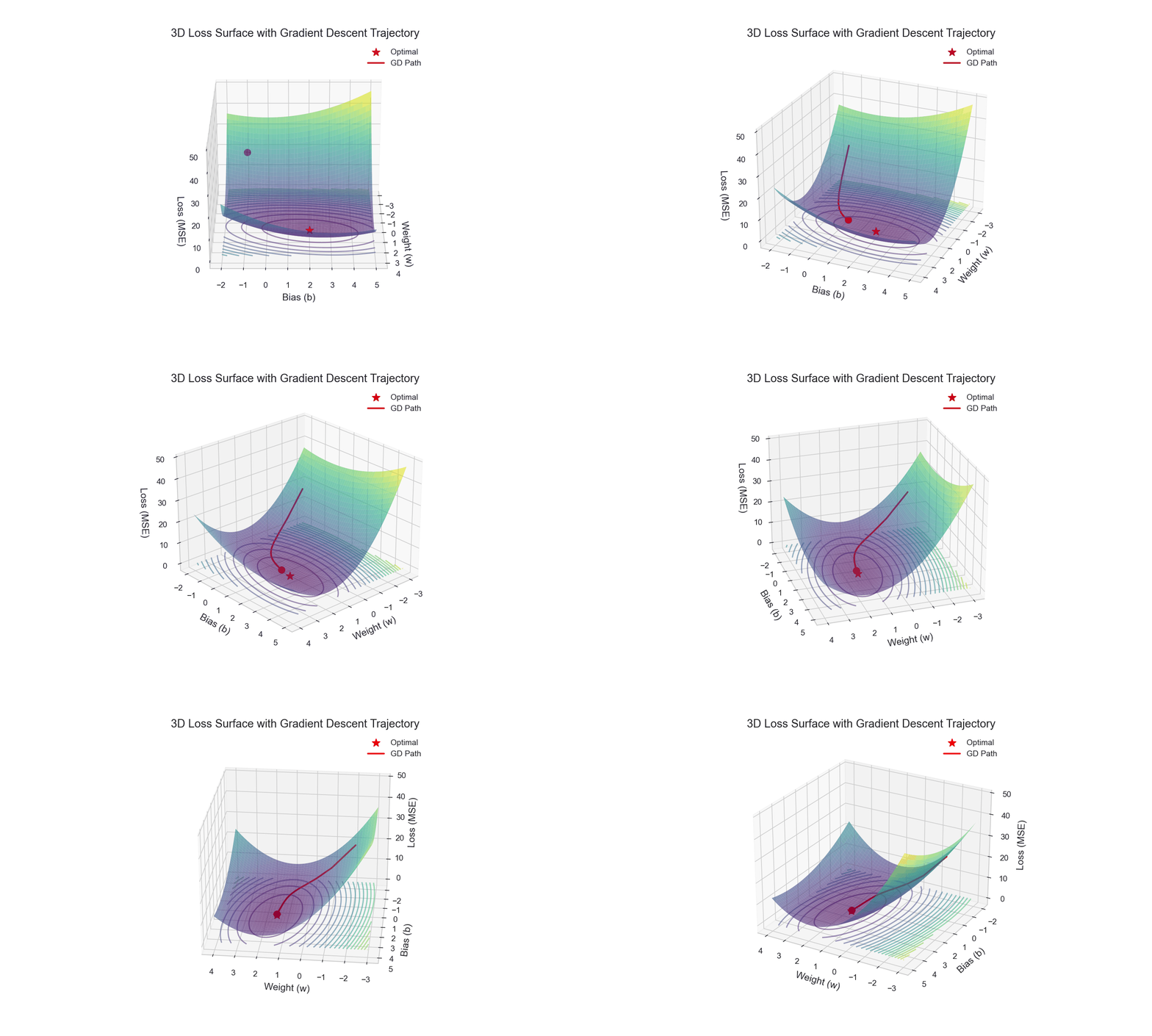
The 3D surface shows the convex MSE loss landscape. Gradient descent follows the steepest descent path toward the minimum.
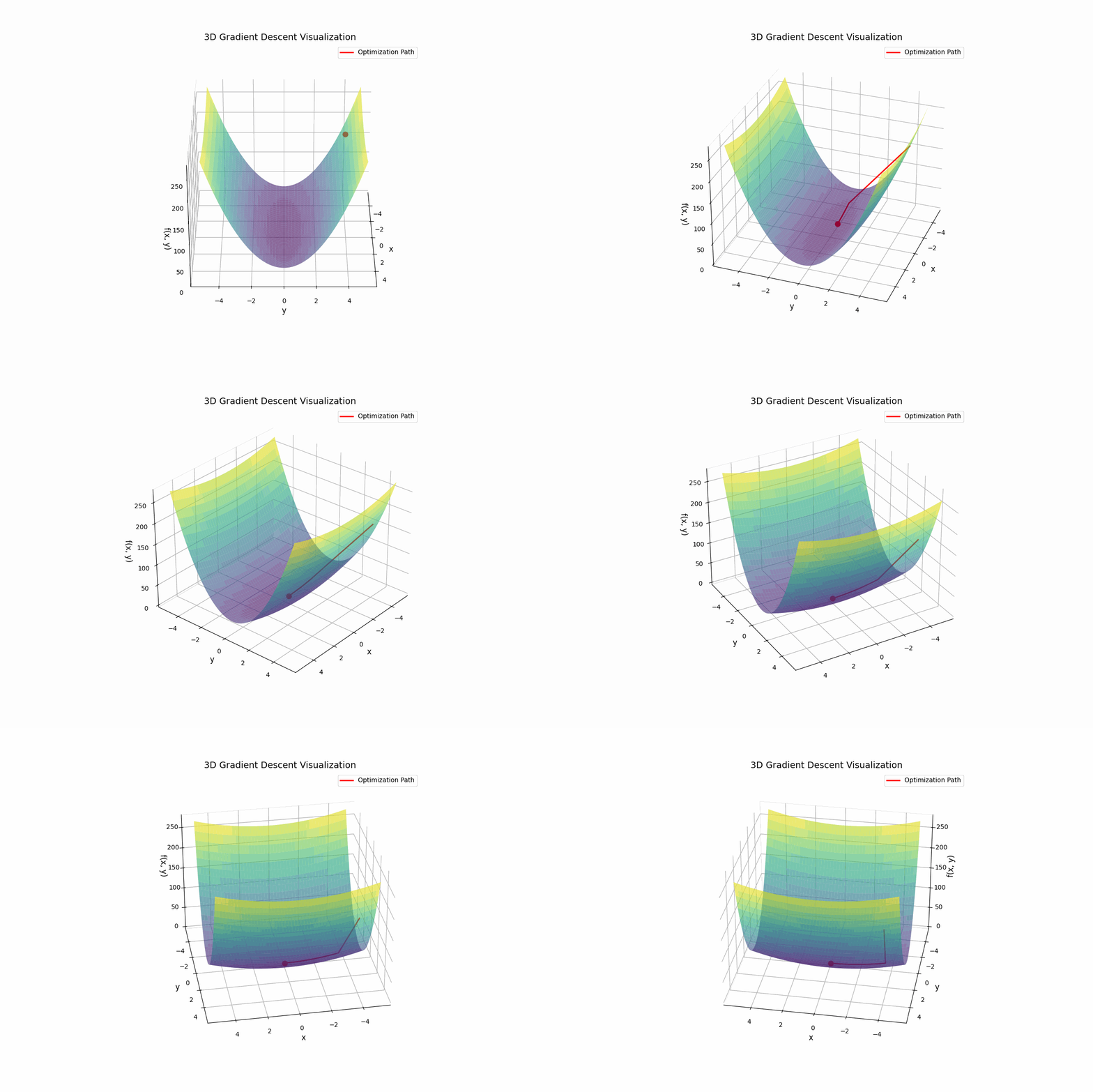
Animated 3D view of gradient descent exploring the parameter space.
Rosenbrock Function Optimization
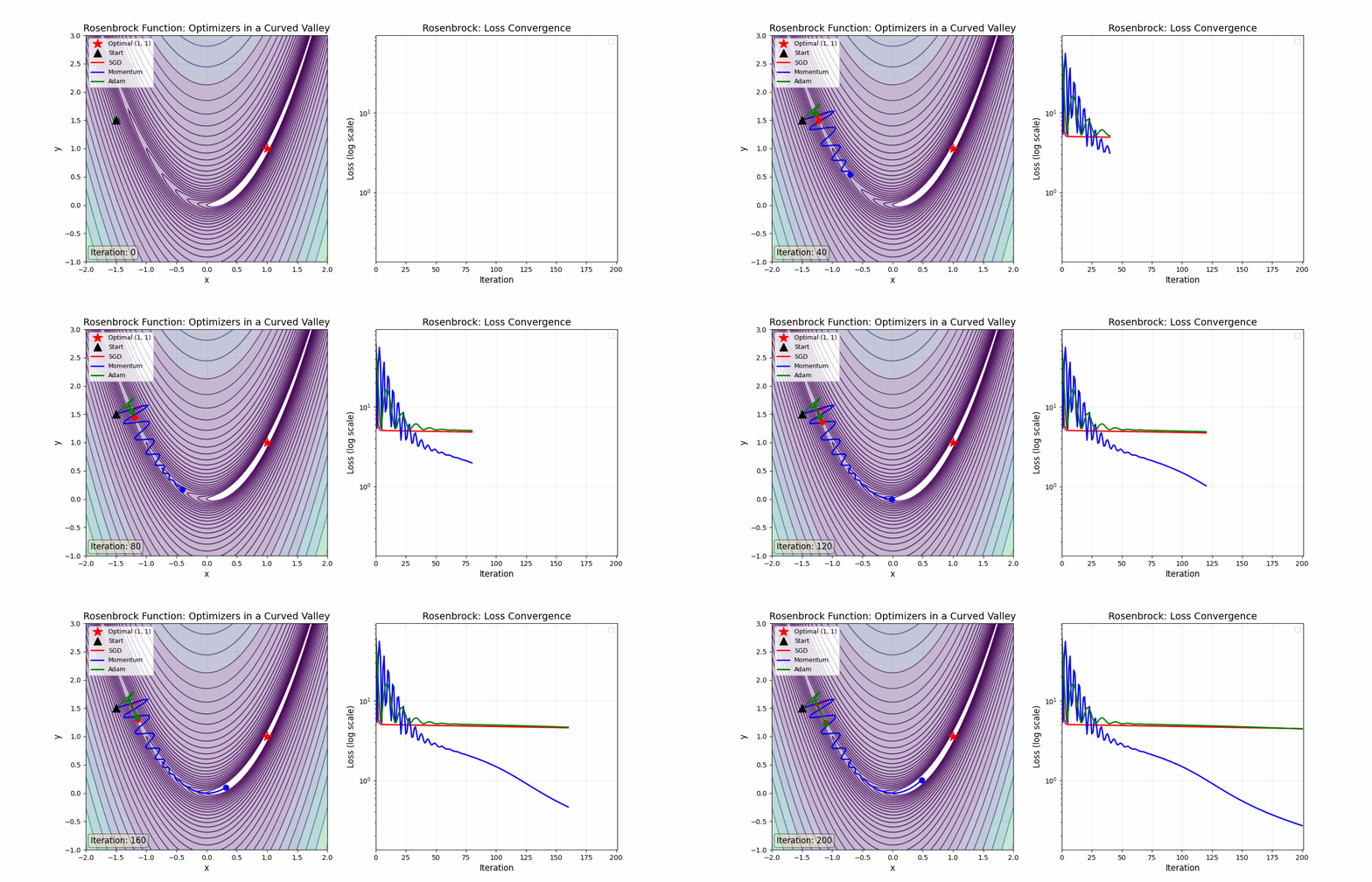
The Rosenbrock function demonstrates real optimization challenges: steep valleys and plateaus that gradient descent must navigate.
Gradient Descent Methods Comparison
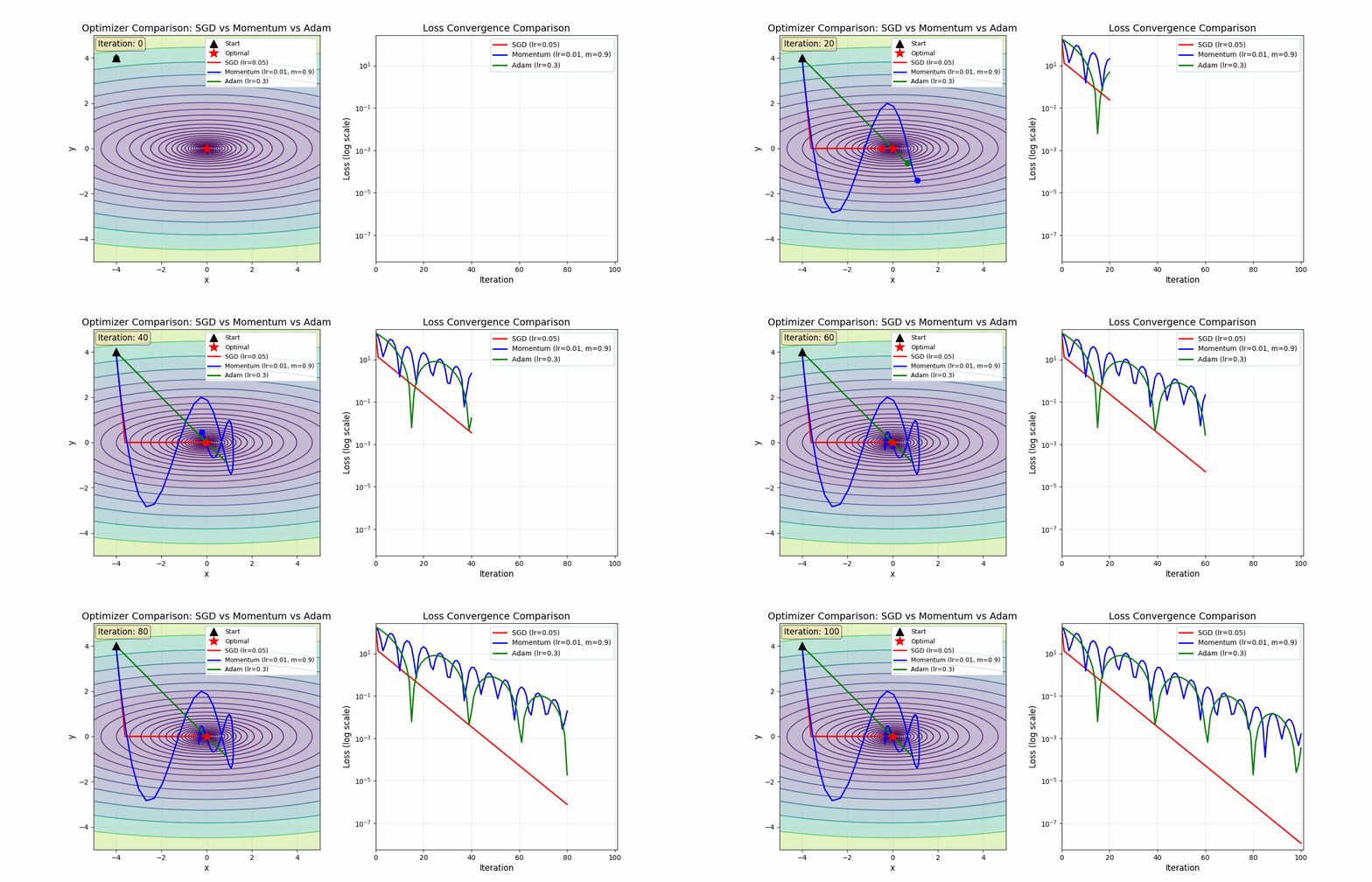
Comparison of Batch GD, SGD, and Mini-batch GD trajectories on the same loss landscape.
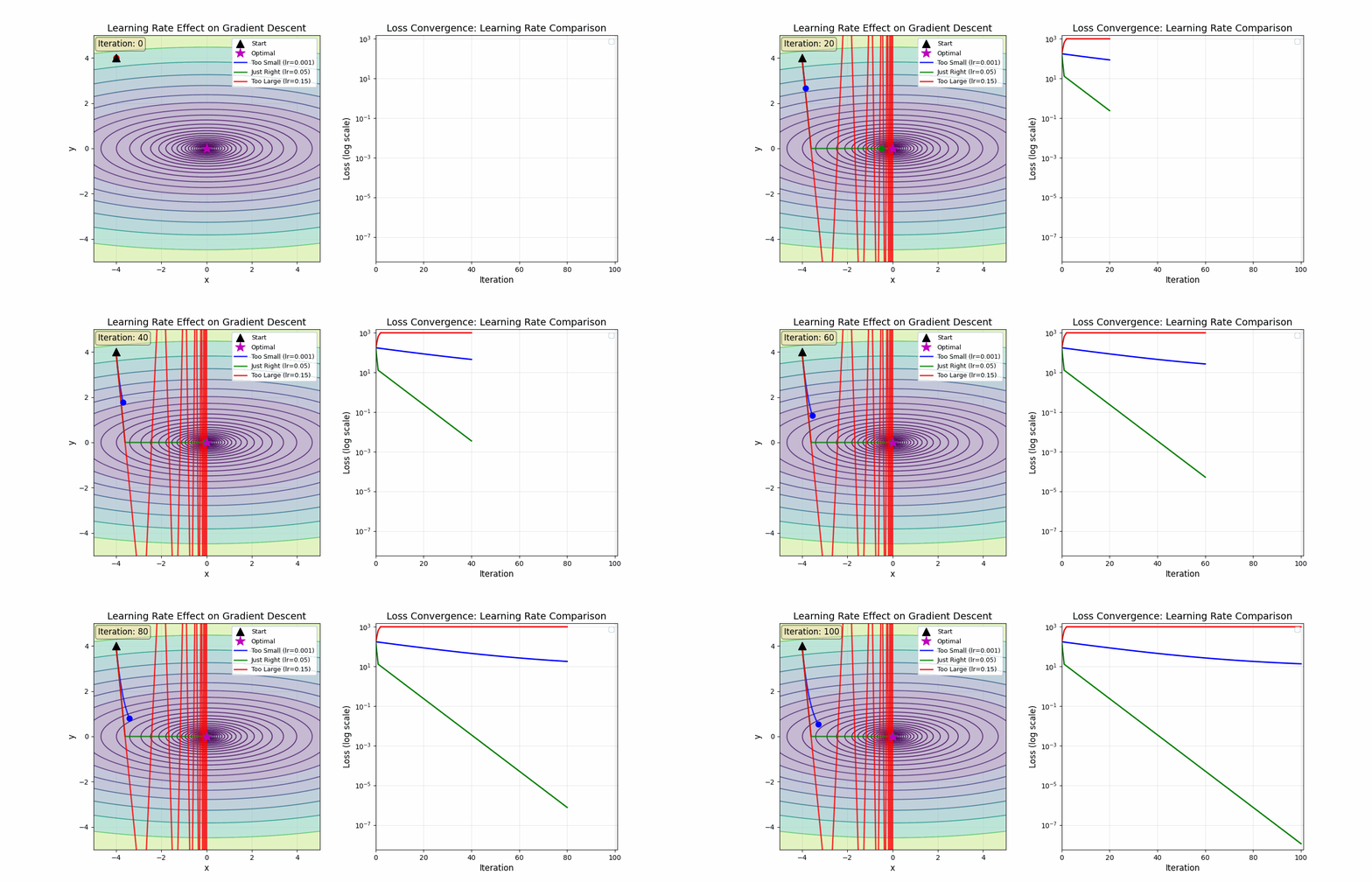
Effect of different learning rates on convergence behavior.
Batch Gradient Descent
from typing import List, Tuple

def gradient_descent_fit(X: List[List[float]], y: List[float],
                         learning_rate: float = 0.01, max_iters: int = 1000,
                         tolerance: float = 1e-6, regularization: str = None,
                         alpha: float = 0.0) -> Tuple[List[float], float, List[float]]:
    """
    Fit linear regression using batch gradient descent.

    Args:
        X: Feature matrix
        y: Target values
        learning_rate: Step size
        max_iters: Maximum iterations
        tolerance: Convergence threshold
        regularization: None, 'l1', 'l2', or 'elasticnet'
        alpha: Regularization strength

    Returns:
        weights, intercept, loss_history
    """
    n_samples = len(X)
    n_features = len(X[0])

    # Initialize weights
    weights = [0.0] * n_features
    intercept = 0.0
    loss_history = []

    for iteration in range(max_iters):
        # Compute predictions
        predictions = [intercept + sum(w * x for w, x in zip(weights, X[i]))
                       for i in range(n_samples)]

        # Compute errors
        errors = [predictions[i] - y[i] for i in range(n_samples)]

        # Compute loss
        mse = sum(e ** 2 for e in errors) / (2 * n_samples)
        reg_loss = 0
        if regularization == 'l2':
            reg_loss = alpha * sum(w ** 2 for w in weights) / 2
        elif regularization == 'l1':
            reg_loss = alpha * sum(abs(w) for w in weights)
        loss_history.append(mse + reg_loss)

        # Compute gradients
        grad_weights = [0.0] * n_features
        for j in range(n_features):
            grad_weights[j] = sum(errors[i] * X[i][j] for i in range(n_samples)) / n_samples

            # Add regularization gradient
            if regularization == 'l2':
                grad_weights[j] += alpha * weights[j]
            elif regularization == 'l1':
                grad_weights[j] += alpha * (1 if weights[j] > 0 else -1 if weights[j] < 0 else 0)

        grad_intercept = sum(errors) / n_samples

        # Update weights
        weights_old = weights[:]
        for j in range(n_features):
            weights[j] -= learning_rate * grad_weights[j]
        intercept -= learning_rate * grad_intercept

        # Check convergence
        max_change = max(abs(weights[j] - weights_old[j]) for j in range(n_features))
        if max_change < tolerance:
            break

return weights, intercept, loss_historyimport numpy as np
def gradient_descent_fit(X, y, learning_rate=0.01, max_iters=1000,
tolerance=1e-6, regularization=None, alpha=0.0):
"""
Fit linear regression using batch gradient descent.
Args:
X: Feature matrix, shape (n_samples, n_features)
y: Target values, shape (n_samples,)
learning_rate: Step size
max_iters: Maximum iterations
tolerance: Convergence threshold
regularization: None, 'l1', 'l2', or 'elasticnet'
alpha: Regularization strength
Returns:
weights, intercept, loss_history
"""
X = np.array(X, dtype=np.float64)
y = np.array(y, dtype=np.float64)
n_samples, n_features = X.shape
# Initialize
weights = np.zeros(n_features)
intercept = 0.0
loss_history = []
for iteration in range(max_iters):
# Compute predictions and errors
predictions = X @ weights + intercept
errors = predictions - y
# Compute loss
mse = np.sum(errors ** 2) / (2 * n_samples)
reg_loss = 0
if regularization == 'l2':
reg_loss = alpha * np.sum(weights ** 2) / 2
elif regularization == 'l1':
reg_loss = alpha * np.sum(np.abs(weights))
loss_history.append(mse + reg_loss)
# Compute gradients
grad_weights = (X.T @ errors) / n_samples
# Add regularization gradient
if regularization == 'l2':
grad_weights += alpha * weights
elif regularization == 'l1':
grad_weights += alpha * np.sign(weights)
grad_intercept = np.mean(errors)
# Update
weights_old = weights.copy()
weights -= learning_rate * grad_weights
intercept -= learning_rate * grad_intercept
# Check convergence
if np.max(np.abs(weights - weights_old)) < tolerance:
break
return weights, intercept, loss_historyStochastic Gradient Descent (SGD)
import random
from typing import List, Tuple

def sgd_fit(X: List[List[float]], y: List[float],
            learning_rate: float = 0.01, max_epochs: int = 100,
            regularization: str = None, alpha: float = 0.0,
            random_state: int = None) -> Tuple[List[float], float]:
    """
    Fit using Stochastic Gradient Descent (one sample at a time).
    """
    if random_state is not None:
        random.seed(random_state)

    n_samples = len(X)
    n_features = len(X[0])

    weights = [0.0] * n_features
    intercept = 0.0

    for epoch in range(max_epochs):
        # Shuffle indices
        indices = list(range(n_samples))
        random.shuffle(indices)

        for i in indices:
            # Compute prediction for single sample
            pred = intercept + sum(w * x for w, x in zip(weights, X[i]))
            error = pred - y[i]

            # Update weights
            for j in range(n_features):
                grad = error * X[i][j]
                if regularization == 'l2':
                    grad += alpha * weights[j]
                elif regularization == 'l1':
                    grad += alpha * (1 if weights[j] > 0 else -1 if weights[j] < 0 else 0)
                weights[j] -= learning_rate * grad

            intercept -= learning_rate * error

return weights, interceptimport numpy as np
def sgd_fit(X, y, learning_rate=0.01, max_epochs=100,
regularization=None, alpha=0.0, random_state=None):
"""
Fit using Stochastic Gradient Descent (one sample at a time).
"""
if random_state is not None:
np.random.seed(random_state)
X = np.array(X, dtype=np.float64)
y = np.array(y, dtype=np.float64)
n_samples, n_features = X.shape
weights = np.zeros(n_features)
intercept = 0.0
for epoch in range(max_epochs):
# Shuffle indices
indices = np.random.permutation(n_samples)
for i in indices:
# Compute prediction for single sample
pred = X[i] @ weights + intercept
error = pred - y[i]
# Compute gradient
grad = error * X[i]
if regularization == 'l2':
grad += alpha * weights
elif regularization == 'l1':
grad += alpha * np.sign(weights)
# Update
weights -= learning_rate * grad
intercept -= learning_rate * error
return weights, interceptMini-Batch Gradient Descent
import random
from typing import List, Tuple

def minibatch_gd_fit(X: List[List[float]], y: List[float],
                     learning_rate: float = 0.01, batch_size: int = 32,
                     max_epochs: int = 100, regularization: str = None,
                     alpha: float = 0.0) -> Tuple[List[float], float]:
    """
    Fit using Mini-Batch Gradient Descent.
    """
    n_samples = len(X)
    n_features = len(X[0])

    weights = [0.0] * n_features
    intercept = 0.0

    for epoch in range(max_epochs):
        indices = list(range(n_samples))
        random.shuffle(indices)

        for start in range(0, n_samples, batch_size):
            end = min(start + batch_size, n_samples)
            batch_indices = indices[start:end]
            batch_size_actual = len(batch_indices)

            # Compute batch gradients
            grad_weights = [0.0] * n_features
            grad_intercept = 0.0

            for i in batch_indices:
                pred = intercept + sum(w * x for w, x in zip(weights, X[i]))
                error = pred - y[i]

                for j in range(n_features):
                    grad_weights[j] += error * X[i][j]
                grad_intercept += error

            # Average gradients
            for j in range(n_features):
                grad_weights[j] /= batch_size_actual
                if regularization == 'l2':
                    grad_weights[j] += alpha * weights[j]
            grad_intercept /= batch_size_actual

            # Update
            for j in range(n_features):
                weights[j] -= learning_rate * grad_weights[j]
            intercept -= learning_rate * grad_intercept

return weights, interceptimport numpy as np
def minibatch_gd_fit(X, y, learning_rate=0.01, batch_size=32,
max_epochs=100, regularization=None, alpha=0.0):
"""
Fit using Mini-Batch Gradient Descent.
"""
X = np.array(X, dtype=np.float64)
y = np.array(y, dtype=np.float64)
n_samples, n_features = X.shape
weights = np.zeros(n_features)
intercept = 0.0
for epoch in range(max_epochs):
indices = np.random.permutation(n_samples)
for start in range(0, n_samples, batch_size):
end = min(start + batch_size, n_samples)
batch_idx = indices[start:end]
X_batch = X[batch_idx]
y_batch = y[batch_idx]
# Compute predictions and errors
predictions = X_batch @ weights + intercept
errors = predictions - y_batch
# Compute gradients
grad_weights = (X_batch.T @ errors) / len(batch_idx)
if regularization == 'l2':
grad_weights += alpha * weights
grad_intercept = np.mean(errors)
# Update
weights -= learning_rate * grad_weights
intercept -= learning_rate * grad_intercept
return weights, interceptRegularization Comparison
Ridge vs Lasso Constraint Regions
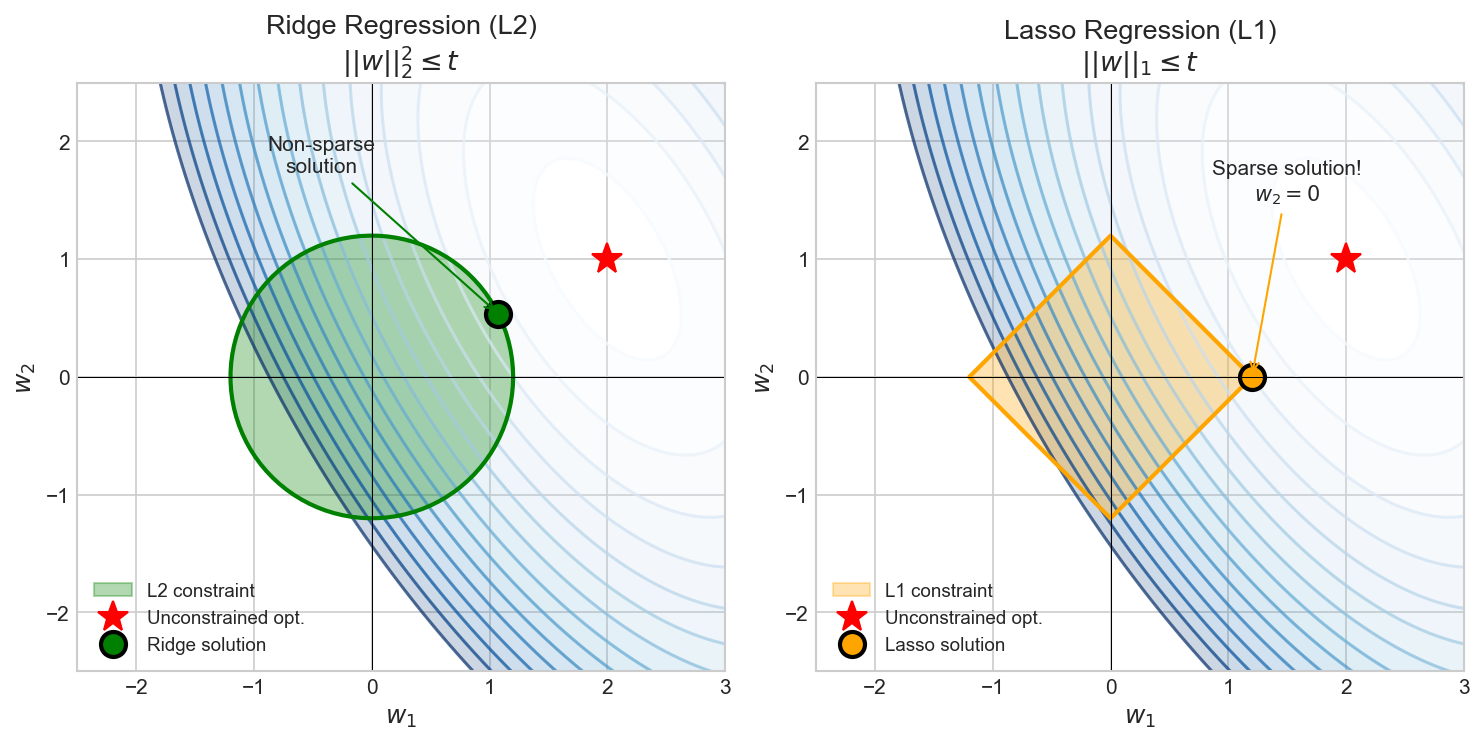
The constraint regions explain why L1 (Lasso) promotes sparsity while L2 (Ridge) only shrinks weights:
- L2 (circle): Contours typically intersect the smooth boundary, yielding non-zero weights
- L1 (diamond): Contours often hit corners where some weights are exactly zero
Comparison Table
| Method | Penalty | Sparsity | Multicollinearity | Use Case |
|---|---|---|---|---|
| OLS | None | No | Unstable | Low-dim, well-conditioned |
| Ridge | No | Handles well | Many features, all relevant | |
| Lasso | Yes | Picks one | Feature selection needed | |
| Elastic Net | Both | Yes | Groups | Correlated features + sparsity |
Algorithm Selection Decision Tree
Walkthrough Example
import numpy as np

# Generate sample data
np.random.seed(42)
n_samples, n_features = 100, 5
X = np.random.randn(n_samples, n_features)
true_weights = np.array([1.5, -2.0, 0.0, 0.0, 3.0])  # Sparse
y = X @ true_weights + np.random.randn(n_samples) * 0.5

# Fit different models
ols_w, ols_b = linear_regression_fit(X, y)
ridge_w, ridge_b = ridge_regression_fit(X, y, alpha=1.0)
lasso_w, lasso_b = lasso_regression_fit(X, y, alpha=0.1)
enet_w, enet_b = elastic_net_fit(X, y, alpha=0.1, l1_ratio=0.5)

print("True weights:  ", true_weights)
print("OLS weights:   ", np.round(ols_w, 3))
print("Ridge weights: ", np.round(ridge_w, 3))
print("Lasso weights: ", np.round(lasso_w, 3))
print("E-Net weights: ", np.round(enet_w, 3))

# Notice: Lasso and Elastic Net drive small coefficients to exactly 0Expected Output:
True weights:   [ 1.5 -2.   0.   0.   3. ]
OLS weights:    [ 1.52 -1.98  0.03 -0.01  2.97]
Ridge weights:  [ 1.48 -1.92  0.02 -0.01  2.89]
Lasso weights:  [ 1.45 -1.85  0.    0.    2.82]  # Sparse!
E-Net weights: [ 1.46 -1.88 0. 0. 2.85] # Sparse!Complexity Analysis
| Method | Time Complexity | Space Complexity |
|---|---|---|
| Closed-form (OLS) | ||
| Closed-form (Ridge) | ||
| Coordinate Descent | ||
| Batch GD | ||
| SGD | ||
| Mini-batch GD |
Where:
Residual Analysis
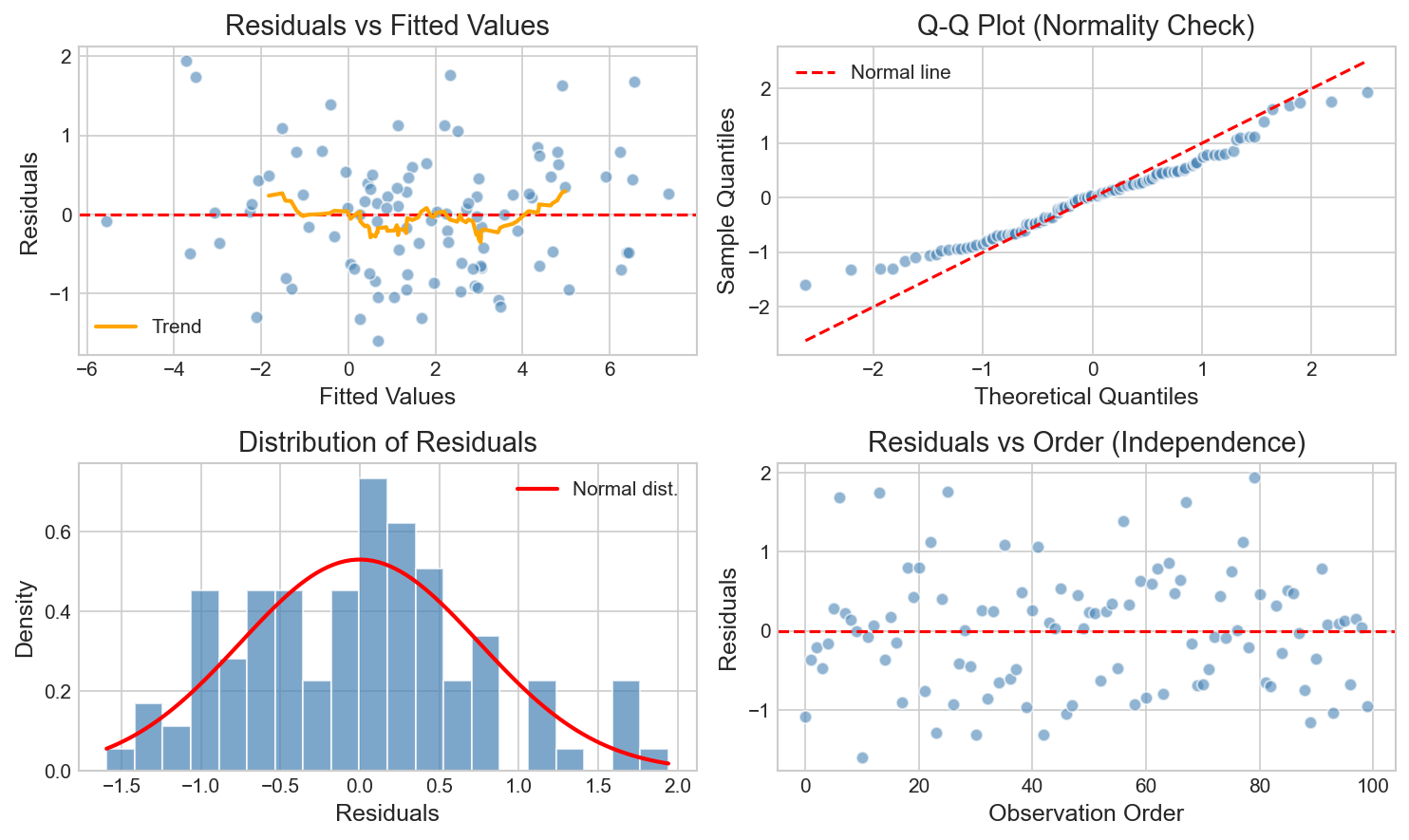
Residual plots validate model assumptions:
- Residuals vs Fitted: Should show no pattern (homoscedasticity)
- Q-Q Plot: Points on line indicate normally distributed errors
- Histogram: Bell curve confirms Gaussian noise assumption
- Residuals vs Order: Random scatter indicates independence
Common Interview Pitfalls
Common Mistakes
- Forgetting to standardize features - Critical for gradient descent and Lasso/Ridge
- Not centering data - Regularization penalizes intercept if not centered
- Wrong gradient for L1 - It's a subgradient (sign function), not differentiable at 0
- Numerical instability - Use
np.linalg.lstsqinstead of explicit inverse - Incorrect convergence check - Check weight change, not just loss
Edge Cases to Handle
def linear_regression_robust(X, y, method='closed', **kwargs):
    """Robust linear regression with edge case handling."""
    X = np.array(X, dtype=np.float64)
    y = np.array(y, dtype=np.float64)

    # Check 1: Empty input
    if len(X) == 0:
        raise ValueError("Empty input array")

    # Check 2: Mismatched dimensions
    if len(X) != len(y):
        raise ValueError(f"X has {len(X)} samples but y has {len(y)}")

    # Check 3: Single sample
    if len(X) == 1:
        raise ValueError("Need at least 2 samples")

    # Check 4: More features than samples (use regularization)
    n_samples, n_features = X.shape
    if n_features >= n_samples and method == 'closed':
        print("Warning: d >= n, switching to Ridge")
        return ridge_regression_fit(X, y, alpha=1.0)

    # Check 5: Constant feature (zero variance)
    variances = np.var(X, axis=0)
    if np.any(variances == 0):
        print("Warning: Removing constant features")
        X = X[:, variances > 0]

    # Proceed with fitting
    if method == 'closed':
        return linear_regression_fit(X, y)
    elif method == 'ridge':
        return ridge_regression_fit(X, y, **kwargs)
    elif method == 'lasso':
return lasso_regression_fit(X, y, **kwargs)Complete Test Suite
def test_linear_regression():
    """Test suite for linear regression implementations."""
    np.random.seed(42)

    # Test 1: Perfect linear relationship
    X = np.array([[1], [2], [3], [4], [5]], dtype=float)
    y = np.array([2, 4, 6, 8, 10], dtype=float)  # y = 2x
    w, b = linear_regression_fit(X, y)
    assert np.allclose(w, [2.0], atol=0.01), f"Expected [2.0], got {w}"
    assert np.allclose(b, 0.0, atol=0.01), f"Expected 0.0, got {b}"
    print("Test 1 passed: Perfect linear fit")

    # Test 2: With noise
    X = np.random.randn(100, 3)
    true_w = np.array([1.0, -0.5, 2.0])
    y = X @ true_w + 0.5 + np.random.randn(100) * 0.1
    w, b = linear_regression_fit(X, y)
    assert np.allclose(w, true_w, atol=0.2), f"Weights off: {w} vs {true_w}"
    print("Test 2 passed: Noisy data")

    # Test 3: Ridge shrinks weights
    w_ols, _ = linear_regression_fit(X, y)
    w_ridge, _ = ridge_regression_fit(X, y, alpha=10.0)
    assert np.linalg.norm(w_ridge) < np.linalg.norm(w_ols)
    print("Test 3 passed: Ridge shrinks weights")

    # Test 4: Lasso produces sparsity
    X = np.random.randn(100, 10)
    true_w = np.zeros(10)
    true_w[:3] = [1.0, -1.0, 0.5]  # Only 3 non-zero
    y = X @ true_w + np.random.randn(100) * 0.1
    w_lasso, _ = lasso_regression_fit(X, y, alpha=0.1)
    n_nonzero = np.sum(np.abs(w_lasso) > 0.01)
    assert n_nonzero < 10, f"Lasso should produce sparse solution, got {n_nonzero} non-zero"
    print("Test 4 passed: Lasso sparsity")

    # Test 5: Gradient descent converges
    X = np.random.randn(50, 3)
    y = X @ np.array([1, 2, 3]) + np.random.randn(50) * 0.5
    w_gd, b_gd, losses = gradient_descent_fit(X, y, learning_rate=0.1, max_iters=1000)
    assert losses[-1] < losses[0], "Loss should decrease"
    print("Test 5 passed: GD convergence")

    print("\nAll tests passed!")

test_linear_regression()Interview Tips
Key Points to Mention
- Start with clarifying questions - closed-form vs iterative, regularization needs
- Discuss trade-offs - closed-form is
but exact; GD is iterative but scalable - Know when to use each method:
- Small data, well-conditioned: Closed-form OLS
- Large data: Mini-batch SGD
- Feature selection: Lasso
- Multicollinearity: Ridge
- Both: Elastic Net
- Always mention feature scaling - crucial for gradient methods and regularization
- Handle edge cases - show production mindset
- Trace through an example - proves understanding